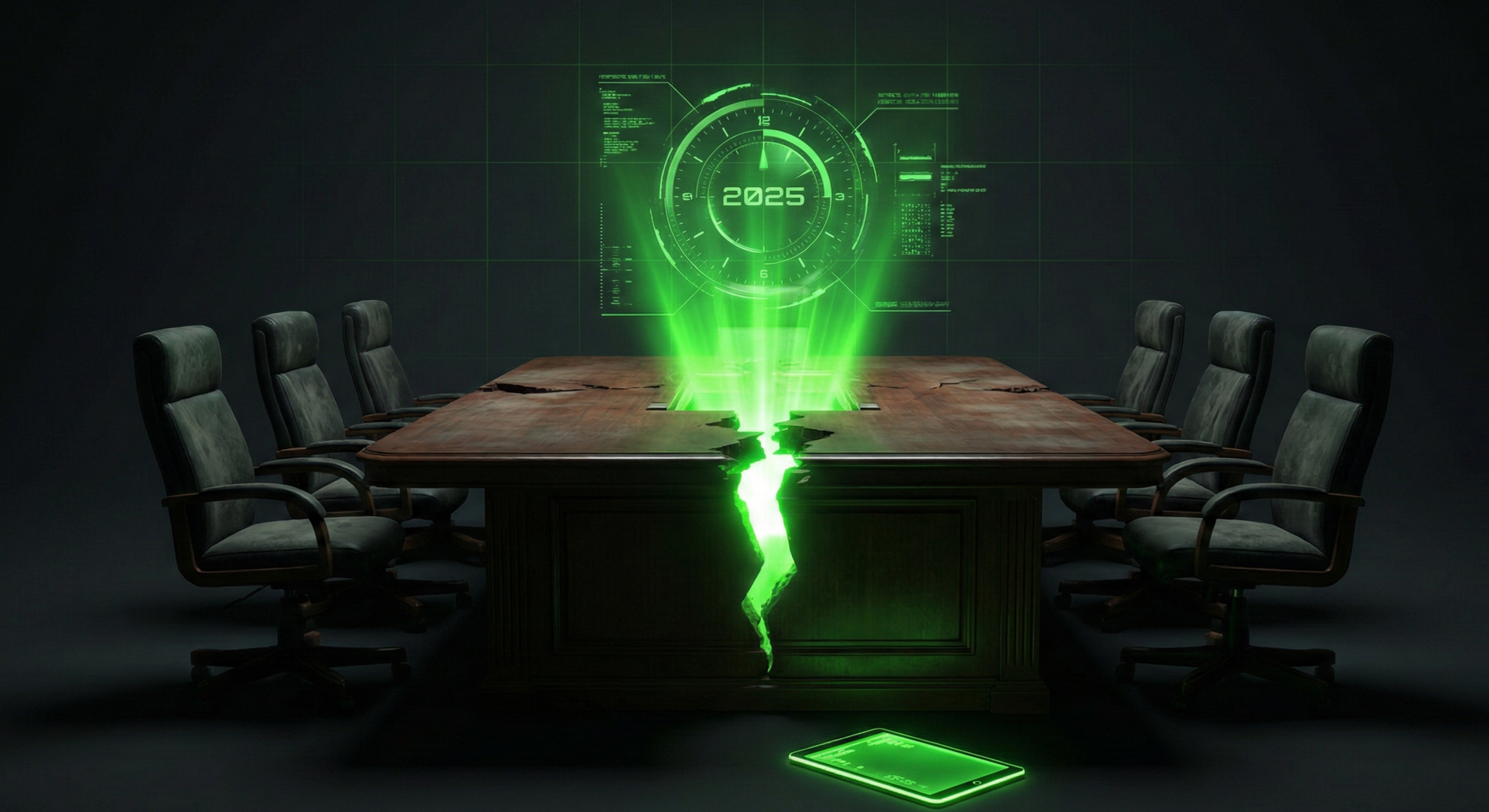
the future already happened
bitcoin launched on january 3, 2009. sixteen years later, most organizations are still sitting in mahogany boardrooms "exploring blockchain use cases." let’s be honest: that isn’t a strategy. that is denial. peter drucker, the father of modern management, had a term for this... he called it "the future that has already happened." it refers to a massive social or economic shift that has already taken place but hasn't yet been reflected in the way we run our businesses or our lives.
the shift occurred. the tectonic plates moved. you are just still trying to manage your world like it is 2008.
effective management starts the moment you stop reacting to the news and start leading what is already well underway. ai didn’t exactly sneak up on you in the middle of the night. gpt-3 was 2020. robotics didn’t surprise anyone who was actually paying attention; boston dynamics has been posting viral videos for years. and bitcoin definitely isn’t the "new" kid on the block anymore. the whitepaper is literally older than instagram. michael saylor didn’t invent some far-off future. he just looked at the one that had already arrived and decided to manage his company accordingly.
there are really three types of organizations in the world right now: those studying the change (the "wait and see" crowd), those trying to adapt to it (the "me too" crowd), and those who are completely rebuilding their entire foundation around it.
management only works when you actually know which future you are managing toward. otherwise, you can spend a thousand minutes in meetings and end up exactly nowhere. maintaining the status quo in 2025 isn’t a sign of stability. it is just a slow, quiet decline with better excuses and flashier slide decks. the best managers... the ones who actually move the needle... are the ones who realized the future already happened. they didn't wait for a consensus. they just reorganized everything—their treasury, their tech stack, their teams—around that single, unchangeable fact.
the "one minute manager" style works because it is about clarity. set the goal. praise the actions that move you toward the new reality. redirect the ones that are still stuck in the past. it creates a lasting impact... but only if you are managing the right future. if you are managing for a world where central banks don't print money or where machines don't think, you are already obsolete.
which future are you managing today? are you building for the world that was, or are you leading the one that is already here?